
1930
Uruguay '30
1934
Italy '34
1938
France '38
1950
Brazil '50
1954
Switzerland '54
1958
Sweden '58
1962
Chile '62
1966
England '66
1970
Mexico '70
1974
West Germany '74
1978
Argentina '78
1982
Spain '82
1986
Mexico '86
1990
Italy '90
1994
United States '94
1998
France '98
2002
Korea Japan '02
2006
Germany '06
2010
South Africa '10
2014
Brazil '14
2018
Russia '18
2022
Qatar '22
2026
USA Canada Mexico '26
2002
한·일 · 2002
FIFA World Cup
31 May – 30 Jun 2002 64 matches Korea Japan '02
👟︎ Golden Boot
Ronaldo
BRA Brazil
⚽︎ Golden Ball
Oliver Kahn
DEU Germany
🧤︎ Golden Glove
Oliver Kahn
DEU Germany
BRA Champion

Ronaldo completes his redemption

The Campaign

Brazil's three Rs Ronaldo, Rivaldo, Ronaldinho cut through every opponent. They won all seven matches, scoring 18 goals. Ronaldinho's free-kick that lobbed Seaman was audacious genius. But the story was Ronaldo's four years after the trauma of Paris, he had rebuilt himself physically and mentally, and was scoring goals with a hunger that bordered on fury.

The Final

Germany, marshalled by Oliver Kahn the tournament's best goalkeeper held firm until the 67th minute. Then Kahn, who had been almost perfect, spilled Rivaldo's shot. Ronaldo pounced. Twelve minutes later, Ronaldo scored again. Brazil 2, Germany 0. Ronaldo fell to his knees. Eight goals in the tournament, the Golden Boot, and a redemption arc that transcended sport. Brazil's fifth title more than any nation in history.

2-0 finalRonaldo — 8 goalsBrazil's 5th title
DEU Runner-up

Germany reach the final on Kahn's brilliance

The Journey

Germany's route to the final was built almost entirely on Oliver Kahn's goalkeeping. He was the tournament's best player, a wall of concentration and fury. Miroslav Klose scored five goals and Michael Ballack drove from midfield, but it was Kahn who made the impossible saves. Germany were not the most talented team, but they were the most resilient.

The Heartbreak

Kahn, who had been nearly perfect for the entire tournament, made one mistake. He spilled Rivaldo's shot in the 67th minute, and Ronaldo pounced. Twelve minutes later, Ronaldo scored again. The man who had carried Germany could not carry them through the final. Kahn's error in the 2002 final is one of the cruellest individual moments in World Cup history one mistake after weeks of perfection.

2-0 defeatKahn's one mistakeKlose — 5 goals
Top Scorers
1 BRA Ronaldo 8
2 BRA Rivaldo 5
2 DEU Miroslav Klose 5
4 DNK Jon Dahl Tomasson 4
4 ITA Christian Vieri 4
6 DEU Michael Ballack 3
Golden Boot
Ronaldo

Ronaldo's eight goals completed football's greatest personal redemption two in the final sealed the Golden Boot and Brazil's fifth title. Four years after the trauma of Paris, he had rebuilt himself completely. Klose scored five with trademark diving headers. Rivaldo contributed crucial goals and assists throughout.

The World in 2002

Football reaches a new continent

Football

The first World Cup in Asia was co-hosted by South Korea and Japan, two nations with a fraught shared history. France arrived as defending champions and European champions simultaneously. Ronaldo was returning after the mysterious collapse before the 1998 final. Senegal, making their World Cup debut, were drawn against France in the opening match.

The World

September 11th had happened nine months earlier. The security apparatus was vast. The War on Terror was reshaping global politics. Kick-off times were set for Asian evenings, meaning European fans would be watching at dawn.

First in AsiaPost-9/11 securityFrance as double champions
The Venues

Twenty stadiums across two nations

Preparation

The first co-hosted World Cup required an extraordinary infrastructure effort. South Korea built ten new stadiums. Japan built or renovated ten more. The combined spend exceeded $4 billion. Many of the purpose-built venues would struggle to fill seats after the tournament, a problem that foreshadowed future hosting debates.

The Venues

The International Stadium Yokohama hosted the final, holding 72,000. The Seoul World Cup Stadium, built on a former landfill site, was a striking bowl design. The Sapporo Dome featured a retractable natural grass pitch that could slide outdoors. Saitama, Osaka, and Daegu were among the other major grounds. Twenty stadiums in total set a new record.

20 stadiumsYokohama 72,000$4B investment
Korea Japan 2002
Korea Japan 2002
0 matches

Played across 32 teams

48Group8R164QF2SF13rd1Final

The Host Cities

Twenty cities across two nations

The Cities

Ten South Korean cities (Seoul, Busan, Daegu, Incheon, Gwangju, Suwon, Daejeon, Jeonju, Ulsan, Seogwipo) and ten Japanese cities (Yokohama, Tokyo, Osaka, Sapporo, Kobe, Niigata, Oita, Shizuoka, Kashima, Rifu) hosted matches. Teams were based in hotels and training centres in both countries. The cultural contrasts between the co-hosts were stark, from Seoul's energy to Sapporo's northern calm.

Impact

Combined infrastructure spending exceeded $4 billion. South Korea's Red Devils supporters generated a global television phenomenon. Both nations upgraded transport, telecommunications, and hospitality infrastructure. Tourism between the two countries increased significantly. However, many purpose-built stadiums struggled with low post-tournament use, particularly in smaller Japanese cities. The co-hosting model demonstrated both the benefits of shared costs and the challenges of divided logistics.

20 host cities$4B combined spendRed Devils phenomenon
Adidas Fevernova
On the pitch
0 goals

2.52per match

Match Ball
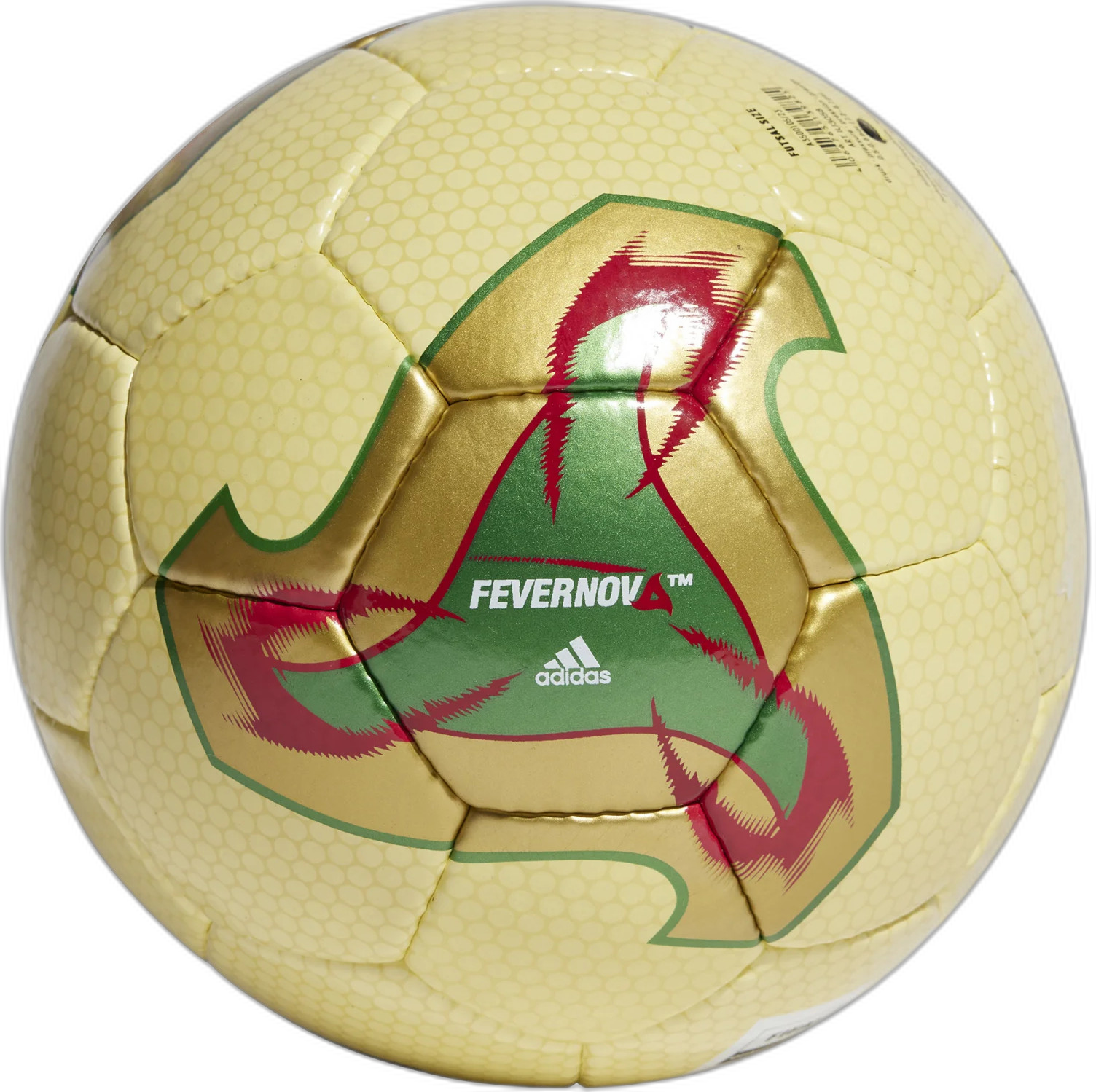
Adidas Fevernova

The Fevernova was the most radical World Cup ball redesign since the Telstar. Its gold-and-red turbine pattern divided opinion sharply, but its three-layer chassis and refined syntactic foam produced superior accuracy. Goalkeepers initially complained about its unpredictable movement, then adapted. Ronaldinho's free-kick that lobbed Seaman exploited the Fevernova's swerve potential to perfection.

Goals by minute
24 1-15 19 16-30 19 31-45 34 46-60 28 61-75 37 76+
Goals by stage
Group130
R1617
QF5
SF2
3rd5
Final2
The Squads

Asia's first, and football's wildest

The Contenders

Brazil, with the three Rs Ronaldo, Rivaldo, Ronaldinho were devastating in attack. France arrived as holders and Euros champions but imploded without scoring a goal. South Korea, co-hosts, reached the semifinals on a wave of national fervour and controversial refereeing. Senegal stunned France in the opening match.

Style & Identity

The co-hosted format across Japan and South Korea created logistical headaches but electrifying atmospheres. Early kick-off times for European viewers meant matches at breakfast. Turkey and the USA reached the semifinals and quarter-finals respectively, proving the game's reach was expanding. Ronaldo's redemption eight goals after the 1998 trauma was the tournament's defining arc.

Ronaldo's redemptionFrance implodesKorea's run
Golden Ball
Oliver Kahn
Germany

The Golden Ball went to a goalkeeper a reflection of how completely Kahn carried Germany to the final. A wall of concentration and fury, he was virtually unbeatable until one spilled shot in the final gifted Ronaldo his opening goal.

Golden Glove
Oliver Kahn
Germany

Won both the Golden Ball and the Lev Yashin Award the only goalkeeper to win both. He was virtually unbeatable for six matches until the final, where one mistake against Ronaldo undid weeks of perfection. The cruelest individual moment in World Cup history.

Golden Ball
Oliver Kahn
Germany

The Golden Ball went to a goalkeeper a reflection of how completely Kahn carried Germany to the final. A wall of concentration and fury, he was virtually unbeatable until one spilled shot in the final gifted Ronaldo his opening goal.

Golden Glove
Oliver Kahn
Germany

Won both the Golden Ball and the Lev Yashin Award the only goalkeeper to win both. He was virtually unbeatable for six matches until the final, where one mistake against Ronaldo undid weeks of perfection. The cruelest individual moment in World Cup history.

The Legends

Ronaldo's redemption

Stars

Ronaldo scored eight goals, including both in the final, completing a personal redemption arc that transcended sport. Ronaldinho's audacious free-kick over David Seaman lobbed from 35 yards was either genius or a mishit. Nobody is sure. Rivaldo completed Brazil's attacking trident. Oliver Kahn was the tournament's best goalkeeper until the final, when he gifted Ronaldo his opening goal.

Moments

South Korea's run to the semifinals was powered by extraordinary crowd energy and refereeing decisions that remain bitterly contested by Spain and Italy. Senegal's opening-day victory over France the holders eliminated without scoring a goal was the first great shock of the new century. Turkey's Hakan Şükür scored the fastest World Cup goal ever, after 11 seconds in the third-place match. The tournament proved football truly belonged to the whole world.

Ronaldo — 8 goalsRonaldinho's lobŞükür in 11 seconds
32 Participating Nations
This site uses cookies and localStorage for authentication, preferences, and gameplay. No third-party tracking. Privacy Policy