1930
Uruguay '30
1934
Italy '34
1938
France '38
1950
Brazil '50
1954
Switzerland '54
1958
Sweden '58
1962
Chile '62
1966
England '66
1970
Mexico '70
1974
West Germany '74
1978
Argentina '78
1982
Spain '82
1986
Mexico '86
1990
Italy '90
1994
United States '94
1998
France '98
2002
Korea Japan '02
2006
Germany '06
2010
South Africa '10
2014
Brazil '14
2018
Russia '18
2022
Qatar '22
2026
USA Canada Mexico '26
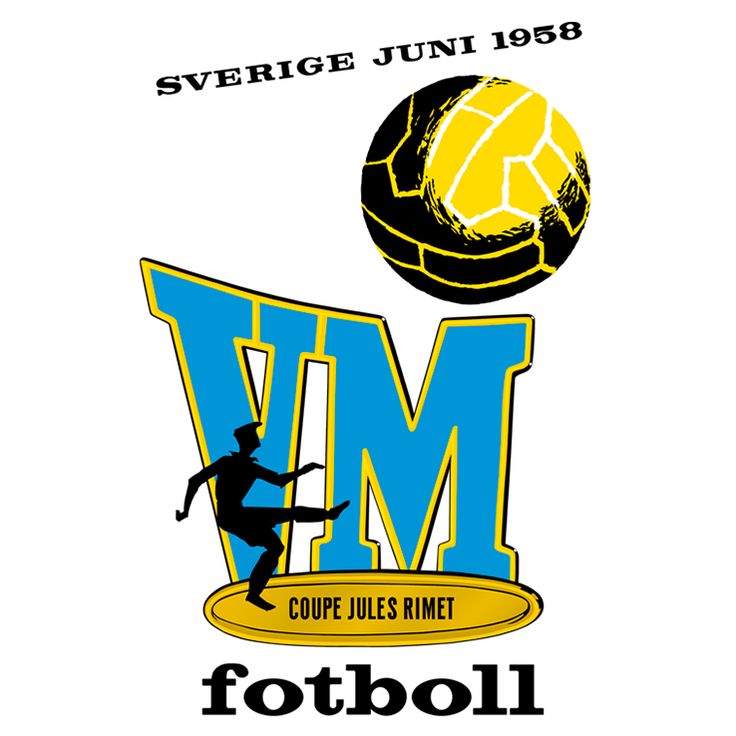
1958
Sverige · 1958
FIFA World Cup
8 Jun – 29 Jun 1958 35 matches Sweden '58
👟︎ Golden Boot
Just Fontaine
FRA France
⚽︎ Golden Ball
Pelé
BRA Brazil
🧤︎ Golden Glove
Harry Gregg
NIR Northern Ireland
BRA Champion

Brazil announce a new era

The Campaign

Brazil started cautiously draws against England were not in the plan. But once Pelé and Garrincha were selected together against the Soviet Union in the group stage, the team ignited. They swept past Wales, France (5-2, with Pelé scoring a hat-trick), and into the final with a swagger no team had brought to the World Cup before.

The Final

Sweden took an early lead. Brazil responded with five goals. Vavá scored twice, Pelé twice including a stunning lob over a defender followed by a volley and Zagallo closed it. The 5-2 victory was total domination. The 17-year-old Pelé cried on the shoulders of his teammates. Brazil had claimed their first World Cup and changed football's centre of gravity forever.

5-2 finalPelé hat-trick v FranceFirst Brazilian title
SWE Runner-up

Sweden's dream run on home soil

The Journey

Sweden were accomplished hosts, combining home advantage with a talented squad led by Nils Liedholm and Kurt Hamrin. They beat the Soviet Union, West Germany, and in the semifinal they dismantled the defending champions a statement performance. Reaching the final as hosts was a national triumph.

The Heartbreak

Liedholm gave Sweden the lead in the fourth minute. For a few moments, the impossible seemed possible. But Brazil were Brazil Vavá equalised, then scored again. Pelé added two of his own. The 5-2 defeat was comprehensive. Sweden had met a team that was simply from another planet. No disgrace in losing to what many still consider the beginning of the greatest dynasty in football.

Led after 4 mins5-2 defeatHosts' best finish
Top Scorers
1 FRA Just Fontaine 13
2 BRA Pelé 6
2 FRG Helmut Rahn 6
4 NIR Peter McParland 5
4 BRA Vavá 5
6 SWE Agne Simonsson 4
Golden Boot
Just Fontaine

Fontaine's thirteen goals will almost certainly never be broken scored in every match, in borrowed boots, with a clinical efficiency that bordered on absurd. Pelé scored six at seventeen, including a hat-trick in the semifinal. Rahn hit six for West Germany. The tournament was an explosion of attacking football from start to finish.

The World in 1958

A new generation was arriving

Football

The Soviet Union would enter for the first time, bringing Eastern Bloc tactical discipline. France had a prolific striker named Just Fontaine. Brazil's squad included a seventeen-year-old from Três Corações named Pelé, largely unknown outside South America.

The World

The European Economic Community had just been founded. Decolonisation was accelerating across Africa. Rock and roll was rewriting popular culture. The world was getting smaller, and football was about to enter its global age.

Soviet debutPelé unknownDecolonisation era
The Venues

Scandinavian simplicity

Preparation

Sweden's approach was modest. Existing municipal stadiums were used with minimal renovation. The Råsunda Stadion in Solna, near Stockholm, was selected as the main venue and final host. Twelve grounds spread across the country ensured broad geographic coverage.

The Venues

Råsunda, home of AIK and the Swedish national team, held 50,000 for the final. Gothenburg's Nya Ullevi, purpose-built for the 1958 athletics season, was another major venue. Malmö, Norrköping, Helsingborg, and several smaller cities added grounds. The venues were functional rather than grand.

12 venuesRåsunda 50,000Nya Ullevi
Sweden 1958
Sweden 1958
0 matches

Played across 14 teams

27Group3QF1SF1Final

The Host Cities

Swedish summer, twelve towns

The Cities

Stockholm, Gothenburg, Malmö, Norrköping, Helsingborg, Halmstad, Sandviken, Örebro, Eskilstuna, Västerås, Uddevalla, and Borås hosted matches. The wide distribution brought the World Cup to twelve smaller Swedish towns that had never seen international football. Teams were based in modest hotels and trained on municipal pitches. The June weather provided long Scandinavian evenings perfect for outdoor events.

Impact

Smaller host cities like Sandviken and Borås experienced unprecedented international attention. Local economies benefited from visiting fans, journalists, and team delegations. The tournament helped modernise Swedish sports facilities and boosted the country's tourism profile. The success of the hosting contributed to Sweden's growing reputation as a progressive, well-organised Nordic nation.

12 host townsSmall-town footballNordic summer
Top Star
On the pitch
0 goals

3.6per match

Match Ball
Top Star

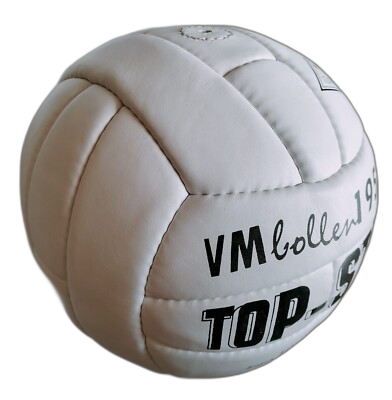
Sweden's Top Star was a 24-panel ball with improved water resistance and a more consistent bounce. Its lighter weight and better shape retention suited Brazil's intricate passing and Fontaine's sharp finishing. It was the last World Cup ball before synthetic materials began to change the game.

Goals by minute
14 1-15 23 16-30 18 31-45 21 46-60 25 61-75 25 76+
Goals by stage
Group91
QF7
SF7
Final7
The Squads

A teenager changes everything

The Contenders

Brazil arrived with a 17-year-old named Pelé and a squad of extraordinary depth: Garrincha, Didi, Vavá, Nilton Santos. Sweden were strong hosts. The Soviet Union entered the World Cup for the first time. West Germany returned as defending champions.

Style & Identity

Brazil's 4-2-4 was pure attacking joy two wingers, two strikers, and a midfield axis that controlled every game. Garrincha on the right was virtually unplayable. France, led by Just Fontaine's 13 goals, attacked with abandon. Northern Ireland and Wales reached the quarter-finals, tiny nations punching far above their weight.

Pelé at 17Fontaine's 13 goalsUSSR debut
Golden Ball
Pelé
Brazil

At seventeen, he scored six goals including two in the final and announced himself as the greatest talent football had ever produced. His chest-trap-flick-volley against Wales was the moment the world understood a genius had arrived.

Golden Glove
Harry Gregg
Northern Ireland

The Manchester United keeper just months after surviving the Munich air disaster was named the tournament's best goalkeeper. His bravery and shot-stopping helped Northern Ireland reach the quarter-finals.

Golden Ball
Pelé
Brazil

At seventeen, he scored six goals including two in the final and announced himself as the greatest talent football had ever produced. His chest-trap-flick-volley against Wales was the moment the world understood a genius had arrived.

Golden Glove
Harry Gregg
Northern Ireland

The Manchester United keeper just months after surviving the Munich air disaster was named the tournament's best goalkeeper. His bravery and shot-stopping helped Northern Ireland reach the quarter-finals.

The Legends

Pelé announces himself to the world

Stars

Pelé, 17 years old, scored six goals including two in the final. Just Fontaine scored 13 a record that will almost certainly never be broken. Garrincha, the joy of the people, terrorised every right-back he faced. Didi controlled Brazil's midfield with a languid authority. Nils Liedholm orchestrated Sweden's run to the final.

Moments

Pelé's goal against Wales in the quarter-final chest trap, flick over a defender, volley announced a genius. Fontaine's 13 goals in six matches were scored in borrowed boots. Garrincha and Pelé started together for the first time against the Soviet Union; Brazil never lost a match when both played. Northern Ireland and Wales, nations of fewer than three million each, both reached the last eight.

Pelé — 6 goals at 17Fontaine's 13Garrincha unleashed
16 Participating Nations
This site uses cookies and localStorage for authentication, preferences, and gameplay. No third-party tracking. Privacy Policy