
1930
Uruguay '30
1934
Italy '34
1938
France '38
1950
Brazil '50
1954
Switzerland '54
1958
Sweden '58
1962
Chile '62
1966
England '66
1970
Mexico '70
1974
West Germany '74
1978
Argentina '78
1982
Spain '82
1986
Mexico '86
1990
Italy '90
1994
United States '94
1998
France '98
2002
Korea Japan '02
2006
Germany '06
2010
South Africa '10
2014
Brazil '14
2018
Russia '18
2022
Qatar '22
2026
USA Canada Mexico '26
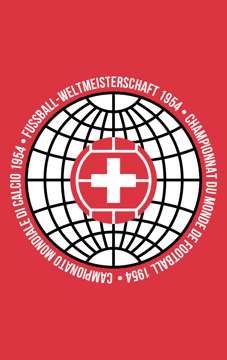
1954
Suisse · 1954
FIFA World Cup
16 Jun – 4 Jul 1954 26 matches Switzerland '54
👟︎ Golden Boot
Sándor Kocsis
HUN Hungary
⚽︎ Golden Ball
Ferenc Puskás
HUN Hungary
🧤︎ Golden Glove
Toni Turek
FRG West Germany
FRG Champion

West Germany produce the Miracle of Bern

The Campaign

West Germany deliberately lost 8-3 to Hungary in the group stage, resting key players for the knockout rounds or so the theory goes. They beat Yugoslavia and Austria on their way to a final nobody expected them to reach. Sepp Herberger's tactical nous and Fritz Walter's leadership had forged a team greater than the sum of its parts.

The Final

Hungary scored twice in the first eight minutes. The match seemed over. But Max Morlock pulled one back in the 10th minute, and Helmut Rahn equalised in the 18th. Then, with six minutes remaining, Rahn struck again a muddy, thunderous shot from the edge of the box. West Germany 3, Hungary 2. The Miracle of Bern gave a broken nation its identity back. Fritz Walter wept.

3-2 comebackMiracle of BernRahn's winner
HUN Runner-up

Hungary's Mighty Magyars fall at the last

The Journey

Hungary were four years unbeaten. They had beaten England 6-3 at Wembley. Puskás, Kocsis, Hidegkuti, Czibor, and Bozsik played a brand of football the world had never seen. They scored 27 goals in five matches, including the 8-3 group-stage demolition of West Germany. They were not just favourites they were considered invincible.

The Heartbreak

Puskás was injured and played the final at half fitness. Hungary still led 2-0 after eight minutes. Then West Germany scored three. The rain in Bern suited Fritz Walter. Hungary threw everything forward. Puskás had a late goal controversially disallowed. The final whistle was a seismic shock. The greatest team of its era had lost the one match that mattered most. The Hungarian uprising two years later would scatter the squad across the world.

4 years unbeaten2-0 up after 8 minsPuskás goal disallowed
Top Scorers
1 HUN Sándor Kocsis 11
2 FRG Max Morlock 6
2 CHE Josef Hügi 6
2 AUT Erich Probst 6
5 DEU Hans Schäfer 4
5 FRG Helmut Rahn 4
Golden Boot
Sándor Kocsis

Kocsis scored eleven goals the most by any player in a single World Cup until Fontaine surpassed him four years later. His heading ability was extraordinary. The tournament averaged 5.38 goals per match, a record that still stands. The lighter ball and attacking formations created a goal avalanche that has never been matched.

The World in 1954

A divided world, an unbeatable team

Football

Hungary's Mighty Magyars had been unbeaten for four years, led by Ferenc Puskás. They were widely considered the greatest team ever assembled. Sport had become a proxy battlefield between East and West, and Hungary sat behind the Iron Curtain.

The World

West Germany was still emerging from rubble and occupation. Divided and carrying the weight of collective guilt, the young Federal Republic was searching for an identity. Switzerland, the neutral host, offered a stage outside the Cold War's frontlines.

Mighty MagyarsCold War proxyWest German identity
The Venues

Swiss precision

Preparation

Switzerland's compact geography meant short travel distances between venues. No new stadiums were constructed. The Swiss relied on their existing football grounds, most of which were modest municipal venues. The Wankdorf Stadion in Bern was expanded to host the final.

The Venues

Six cities hosted matches: Bern, Basel, Zurich, Lausanne, Geneva, and Lugano. The Wankdorf in Bern, with 64,000 capacity for the final, was the largest. The St. Jakob Stadion in Basel and the Hardturm in Zurich were intimate by comparison. The alpine setting gave the tournament a distinct atmosphere.

6 citiesWankdorf 64,000No new builds
Switzerland 1954
Switzerland 1954
0 matches

Played across 11 teams

18Group3QF1SF13rd

The Host Cities

Compact Swiss geography

The Cities

Bern, Basel, Zurich, Lausanne, Geneva, and Lugano hosted matches. Switzerland's compact size meant no city was more than a few hours from another by train. Teams were based in alpine hotels and trained at local club grounds. The multilingual nature of the host cities, spanning three language regions, gave the tournament a uniquely European flavour.

Impact

Switzerland's tourism industry, already well-established, absorbed the World Cup smoothly. The tournament reinforced the country's reputation for efficiency and neutrality. Hotel and restaurant revenues rose in host cities, and the rail network handled the influx with characteristic precision. The long-term impact was modest but positive, with Switzerland's global brand enhanced by a well-run event.

6 host cities3 language regionsAlpine tourism
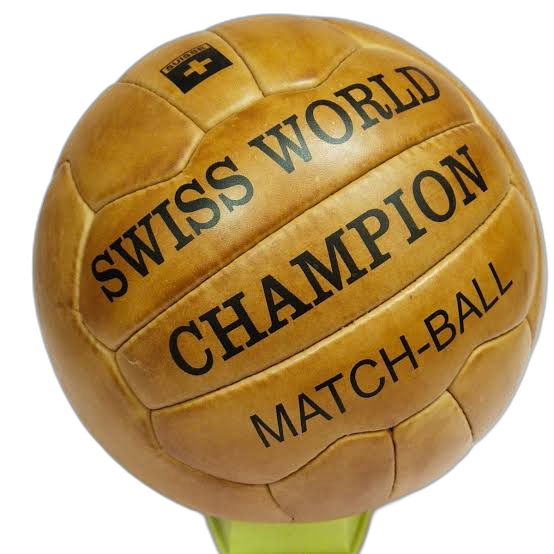
Swiss World Champion
On the pitch
0 goals

5.38per match

Match Ball
Swiss World Champion

The Swiss World Champion had 18 panels instead of the traditional 12, creating a rounder shape. It was lighter than previous balls and had a smoother surface. The improved flight characteristics contributed to the tournament's record-breaking goal tally of 5.38 per match still the highest in World Cup history.

Goals by minute
19 1-15 26 16-30 18 31-45 21 46-60 21 61-75 35 76+
Goals by stage
Group92
QF24
SF6
3rd4
The Squads

The Mighty Magyars and the rest

The Contenders

Hungary were four years unbeaten, their squad a masterclass of coordinated movement: Puskás, Kocsis, Hidegkuti, Czibor, Bozsik. West Germany were unknowns, a team from a country still in rubble. Austria, Uruguay, and Brazil all had pedigree, but nobody expected to beat Hungary.

Style & Identity

Hungary's 4-2-4 with a deep-lying centre-forward rewrote football's tactical language. Hidegkuti's withdrawn role baffled defenders. West Germany, under Sepp Herberger, played with a collective discipline that compensated for inferior individual talent. The final would become football's most famous upset.

Puskás & Kocsis4-2-4 revolutionMiracle of Bern
Golden Ball
Ferenc Puskás
Hungary

The Mighty Magyars' talisman played the final with an injured ankle and still nearly won it. His four-year unbeaten run with Hungary represented the peak of mid-century football. The disallowed late goal in the final haunted him forever.

Golden Glove
Toni Turek
West Germany

His performance in the final saving from Puskás, Czibor, and Kocsis was described by German radio commentator Herbert Zimmermann as 'Toni, you are a football god.' He was the wall that made the Miracle of Bern possible.

Golden Ball
Ferenc Puskás
Hungary

The Mighty Magyars' talisman played the final with an injured ankle and still nearly won it. His four-year unbeaten run with Hungary represented the peak of mid-century football. The disallowed late goal in the final haunted him forever.

Golden Glove
Toni Turek
West Germany

His performance in the final saving from Puskás, Czibor, and Kocsis was described by German radio commentator Herbert Zimmermann as 'Toni, you are a football god.' He was the wall that made the Miracle of Bern possible.

The Legends

Puskás, Kocsis, and the Miracle of Bern

Stars

Sándor Kocsis scored 11 goals, still the most in a single World Cup by any non-Fontaine player. Ferenc Puskás was the heart of Hungary's Mighty Magyars, though he played the final with an injured ankle. Fritz Walter led West Germany with quiet determination, performing best in the rain that suited his style.

Moments

Hungary's 8-3 demolition of West Germany in the group stage seemed to settle the question before the final. It didn't. The final Hungary 2-0 up after eight minutes, then West Germany scoring three was the template for every great comeback. Helmut Rahn's winning goal gave West Germany an identity that went far beyond football.

Kocsis — 11 goalsFritz Walter's rainRahn's winner
16 Participating Nations
This site uses cookies and localStorage for authentication, preferences, and gameplay. No third-party tracking. Privacy Policy