
1930
Uruguay '30
1934
Italy '34
1938
France '38
1950
Brazil '50
1954
Switzerland '54
1958
Sweden '58
1962
Chile '62
1966
England '66
1970
Mexico '70
1974
West Germany '74
1978
Argentina '78
1982
Spain '82
1986
Mexico '86
1990
Italy '90
1994
United States '94
1998
France '98
2002
Korea Japan '02
2006
Germany '06
2010
South Africa '10
2014
Brazil '14
2018
Russia '18
2022
Qatar '22
2026
USA Canada Mexico '26
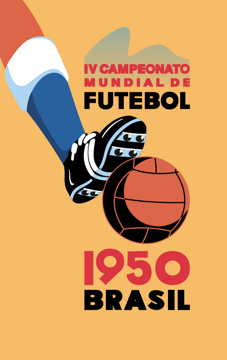
1950
Brasil · 1950
FIFA World Cup
24 Jun – 16 Jul 1950 22 matches Brazil '50
Final Round Round-robin between the four group winners decided the championship.
# Team MPWDL GFGAGDPts
1
Uruguay
3 2 1 0 7 5 2 5
2
Brazil
3 2 0 1 14 4 10 4
3
Sweden
3 1 0 2 6 11 -5 2
4
Spain
3 0 1 2 4 11 -7 1

2 points for a win. No final match was played — the group winner took the title.

👟︎ Golden Boot
Ademir
BRA Brazil
⚽︎ Golden Ball
Zizinho
BRA Brazil
🧤︎ Golden Glove
Roque Máspoli
URY Uruguay
URY Champion

Uruguay produce the greatest upset in history

The Campaign

Uruguay were not expected to win. Their squad was considered ageing, their preparation minimal compared to Brazil's four-year build-up. They scraped through the group stage with a draw against Spain and wins over Bolivia. In the final round-robin group, they needed to beat Brazil at the Maracanã to claim the title.

The Final

Brazil only needed a draw. 199,854 people packed the Maracanã, fireworks were prepared, the newspapers had already printed 'Champions.' Friaça scored for Brazil in the 47th minute. Then Schiaffino equalised. Then, in the 79th minute, Alcides Ghiggia scored along the right side. Silence. Absolute, devastating silence from 200,000 people. The Maracanazo the greatest upset in football history was complete.

2-1 upset199,854 attendanceThe Maracanazo
BRA Runner-up

Brazil's shattering humiliation at home

The Journey

Brazil had built the Maracanã specifically for this tournament. They assembled the most dazzling attacking side in history Ademir, Zizinho, Jair, and Chico. They demolished Sweden 7-1 and Spain 6-1 in the final round-robin group. They needed only a draw against Uruguay to win the title. The celebration was planned. The newspapers were printed.

The Heartbreak

Friaça scored in the 47th minute. Brazil were champions. Then Schiaffino equalised. Then Ghiggia scored. 200,000 people went silent. Players collapsed on the pitch. Goalkeeper Moacir Barbosa was blamed for Ghiggia's goal and never forgiven he was shunned for the rest of his life. Brazil changed their shirt colour from white to yellow, unable to wear the colours of the Maracanazo. The trauma reshaped a nation.

Needed only a draw200,000 silencedShirt colour changed
Top Scorers
1 BRA Ademir 9
2 URY Oscar Míguez 5
3 BRA Chico 4
3 ESP Estanislau Basora 4
3 URY Alcides Ghiggia 4
3 ESP Telmo Zarra 4
Golden Boot
Ademir

Ademir's nine goals remain one of the great individual hauls in World Cup history. Playing inside-forward in Brazil's devastating attack, he combined power with anticipation. The round-robin format created more scoring chances than a knockout would have. Schiaffino and Ghiggia of Uruguay scored the goals that silenced the Maracanã.

The World in 1950

Football returns to a changed world

Football

Twelve years separated this tournament from the last. Germany and Japan were excluded. The Soviet Union chose not to enter. Britain's home nations would participate for the first time, with England arriving convinced of their superiority. Brazil had built the Maracanã, the largest stadium ever constructed, for the occasion.

The World

A world war and millions of lives had reshaped every continent. The post-war world was rebuilding. The Cold War was hardening. Football offered a rare space where nations could compete without the threat of annihilation.

Maracanã builtPost-war rebuild12-year hiatus
The Venues

The Maracanã rises

Preparation

Brazil embarked on the most ambitious stadium project in history. The Maracanã, officially the Estádio Jornalista Mário Filho, was designed to hold 200,000 spectators, making it the largest stadium ever built. Construction was rushed to completion just days before the opening match, with finishing work continuing during the early rounds.

The Venues

The Maracanã in Rio de Janeiro was the overwhelming centrepiece. Six cities hosted matches: Rio, São Paulo, Belo Horizonte, Porto Alegre, Curitiba, and Recife. The Pacaembu in São Paulo and the Independência in Belo Horizonte were the other major grounds. Several venues were modest by modern standards.

Maracanã 200,0006 citiesBuilt in 2 years
Brazil 1950
Brazil 1950
0 matches

Played across 10 teams

16Group6Final Rd

The Host Cities

Brazil's six cities

The Cities

Rio de Janeiro was the centrepiece, but matches also took place in São Paulo, Belo Horizonte, Porto Alegre, Curitiba, and Recife. Rio's Copacabana and Ipanema neighbourhoods became gathering points for fans. Teams trained at club facilities across the host cities. São Paulo's Pacaembu ground and Belo Horizonte's Independência stadium were key secondary venues.

Impact

The construction of the Maracanã alone employed thousands and transformed the Maracanã neighbourhood. The tournament accelerated urban development in Rio and boosted Brazil's international profile at a time when the country was industrialising rapidly. Tourism infrastructure expanded, and the World Cup established Brazil as a football nation in the global imagination. The economic ripple effects reached well beyond the host cities.

6 host citiesMaracanã jobs boomRio transformed
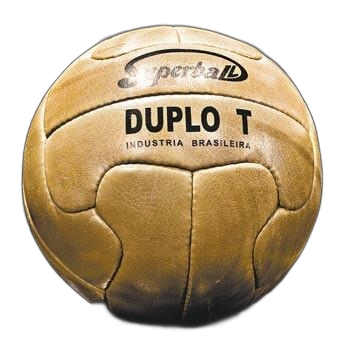
Allen / Superball Duplo T
On the pitch
0 goals

4.0per match

Match Ball
Allen / Superball Duplo T

Brazil introduced the Superball Duplo T with a revolutionary valve system that eliminated the external lace, producing a smoother, rounder ball. It was the first World Cup ball that didn't require a lace to be tucked in. The improvement in aerodynamics was immediately noticeable in the quality of crosses and long passes.

Goals by minute
7 1-15 16 16-30 18 31-45 14 46-60 13 61-75 20 76+
Goals by stage
Group57
Final Rd31
The Squads

The old world meets the new

The Contenders

Brazil built what many considered the greatest attacking side in history for their home tournament. England finally deigned to enter, supremely confident. Uruguay, the 1930 champions, were considered an ageing side. India withdrew reportedly over a ban on playing barefoot.

Style & Identity

Brazil's inside-forward line of Ademir, Jair, and Zizinho played with a fluidity that Europe could not match. England's rigid WM formation looked antiquated from the first whistle. The United States, a ragtag squad of part-timers, would produce the tournament's greatest shock.

Brazil's dream teamEngland's debutUSA shock
Golden Ball
Zizinho
Brazil

Brazil's orchestrator played with a subtlety that Pelé later called the greatest he ever saw. His passing, vision, and ability to control tempo made Brazil's devastating attack function. The Maracanazo overshadowed what should have been a coronation.

Golden Glove
Roque Máspoli
Uruguay

Máspoli's handling and positioning were crucial in the decisive match against Brazil. Behind a defence marshalled by Varela, he made the saves that mattered when 200,000 people expected Brazil to score.

Golden Ball
Zizinho
Brazil

Brazil's orchestrator played with a subtlety that Pelé later called the greatest he ever saw. His passing, vision, and ability to control tempo made Brazil's devastating attack function. The Maracanazo overshadowed what should have been a coronation.

Golden Glove
Roque Máspoli
Uruguay

Máspoli's handling and positioning were crucial in the decisive match against Brazil. Behind a defence marshalled by Varela, he made the saves that mattered when 200,000 people expected Brazil to score.

The Legends

Ademir, Schiaffino, and the Maracanazo

Stars

Ademir scored nine goals, the most by any player in a single World Cup at the time. Zizinho pulled the strings for Brazil with a subtlety that Pelé later called the greatest he ever saw. Juan Alberto Schiaffino of Uruguay was the tournament's most complete player his equaliser in the decisive match broke Brazilian hearts.

Moments

Alcides Ghiggia's goal that silenced 200,000 people in the Maracanã remains the most devastating moment in football history. England's 1-0 loss to the USA was so implausible that British newspapers assumed it was a typo. Obdulio Varela, Uruguay's captain, picked the ball out of the net after Friaça's goal and walked slowly back to the centre circle, killing Brazil's momentum with sheer willpower.

Ademir's 9 goalsGhiggia silences 200,000USA shock England
13 Participating Nations
This site uses cookies and localStorage for authentication, preferences, and gameplay. No third-party tracking. Privacy Policy