1930
Uruguay '30
1934
Italy '34
1938
France '38
1950
Brazil '50
1954
Switzerland '54
1958
Sweden '58
1962
Chile '62
1966
England '66
1970
Mexico '70
1974
West Germany '74
1978
Argentina '78
1982
Spain '82
1986
Mexico '86
1990
Italy '90
1994
United States '94
1998
France '98
2002
Korea Japan '02
2006
Germany '06
2010
South Africa '10
2014
Brazil '14
2018
Russia '18
2022
Qatar '22
2026
USA Canada Mexico '26
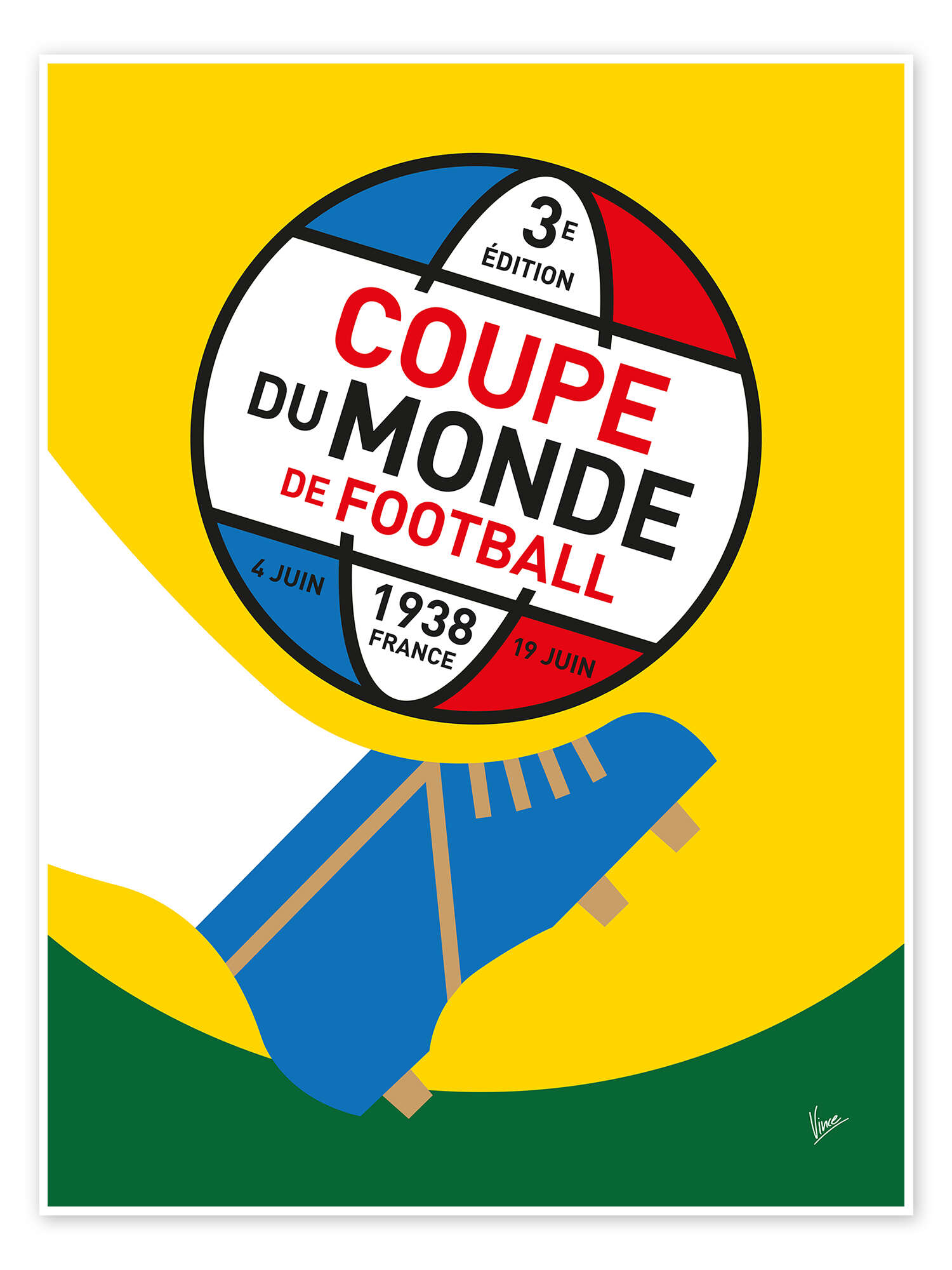
1938
France · 1938
FIFA World Cup
4 Jun – 19 Jun 1938 18 matches France '38
👟︎ Golden Boot
Leônidas
BRA Brazil
⚽︎ Golden Ball
Leônidas
BRA Brazil
🧤︎ Golden Glove
Frantisek Plánička
CSK Czechoslovakia
ITA Champion

Italy defend their crown

The Campaign

Italy arrived in France as defending champions with a refreshed squad. They navigated a tough draw beating Norway, hosts France, and Brazil en route to the final. Silvio Piola emerged as their most dangerous striker, physical and clinical. Pozzo's tactical discipline held firm across four consecutive knockout matches.

The Final

Hungary, with their elegant inside-forward play, took the lead twice and twice Italy equalised. Piola scored twice in a 4-2 victory that sealed back-to-back titles. It was the last World Cup for twelve years. By the time football returned to the world stage, the map of Europe had been redrawn entirely. Italy remain the only team to win consecutive World Cups besides Brazil.

4-2 finalBack-to-back titlesPiola — 2 goals
HUN Runner-up

Hungary's golden generation denied

The Journey

Hungary were among the finest teams in the world, with an inside-forward system that produced beautiful, flowing football. György Sárosi led from the front. They beat the Dutch East Indies, Switzerland, and Sweden to reach the final, scoring 15 goals in four matches.

The Heartbreak

Hungary scored twice to take a 2-1 lead, then an equaliser made it 2-2. Italy scored two more to win 4-2. Hungary's golden generation would be scattered by the war some players fled, some were lost. They would not return to a World Cup final until 1954, with an entirely different squad and an even more heartbreaking ending.

15 goals in 4 matchesLed 2-1War scattered the squad
Top Scorers
1 BRA Leônidas 7
2 ITA Silvio Piola 5
2 HUN Gyula Zsengellér 5
2 HUN György Sárosi 5
5 POL Ernst Wilimowski 4
5 ITA Gino Colaussi 4
Golden Boot
Leônidas

Leônidas da Silva's seven goals announced Brazilian football to the world with acrobatic bicycle kicks unlike anything Europe had seen. He was controversially rested for the semifinal a decision Brazil's coach regretted forever. Piola of Italy scored the goals that mattered in the final. Sárosi of Hungary was elegant but ultimately outscored.

The World in 1938

The last tournament before the darkness

Football

Brazil were preparing to bring their first wave of flair to the world stage. Italy arrived as defending champions under immense political pressure. Many sensed this could be the last World Cup for a very long time.

The World

Germany had annexed Austria months before the tournament, and their merged squad would play under the swastika. Spain was consumed by civil war and did not enter. The Japanese empire was expanding across East Asia. By the following September, Europe was at war.

Austria annexedSpanish Civil WarEve of war
The Venues

France's grand stages

Preparation

France relied on existing infrastructure, using established grounds in ten cities. No new stadiums were built for the tournament, but several venues were renovated to increase capacity. The Stade Olympique de Colombes, which had hosted the 1924 Olympics, was chosen for the final.

The Venues

Colombes, on the outskirts of Paris, was the flagship ground with a capacity of 60,000. Matches were spread from Marseille in the south to Le Havre in the north. The Parc des Princes in Paris and the Stade Vélodrome in Marseille also featured, both venues that would become iconic in later decades.

10 citiesColombes 60,000No new builds
France 1938
France 1938
0 matches

Played across 8 teams

9R165QF2SF13rd1Final

The Host Cities

From Paris to Marseille

The Cities

Ten French cities hosted matches: Paris, Marseille, Lyon, Bordeaux, Toulouse, Strasbourg, Le Havre, Reims, Antibes, and Lille. Teams trained at municipal sports grounds and were housed in local hotels. The geographic spread reflected France's centralised rail network, with Paris as the hub. Antibes, on the Côte d'Azur, provided a glamorous setting for group matches.

Impact

The tournament brought international visitors to France at a time when European travel was increasingly restricted by political tensions. Host cities benefited from short-term tourism revenue, though the looming threat of war dampened long-term economic planning. The event reinforced France's cultural prestige and its role as a diplomatic crossroads in a darkening continent.

10 host citiesRail network hubPre-war tourism
Allen
On the pitch
0 goals

4.67per match

Match Ball
Allen

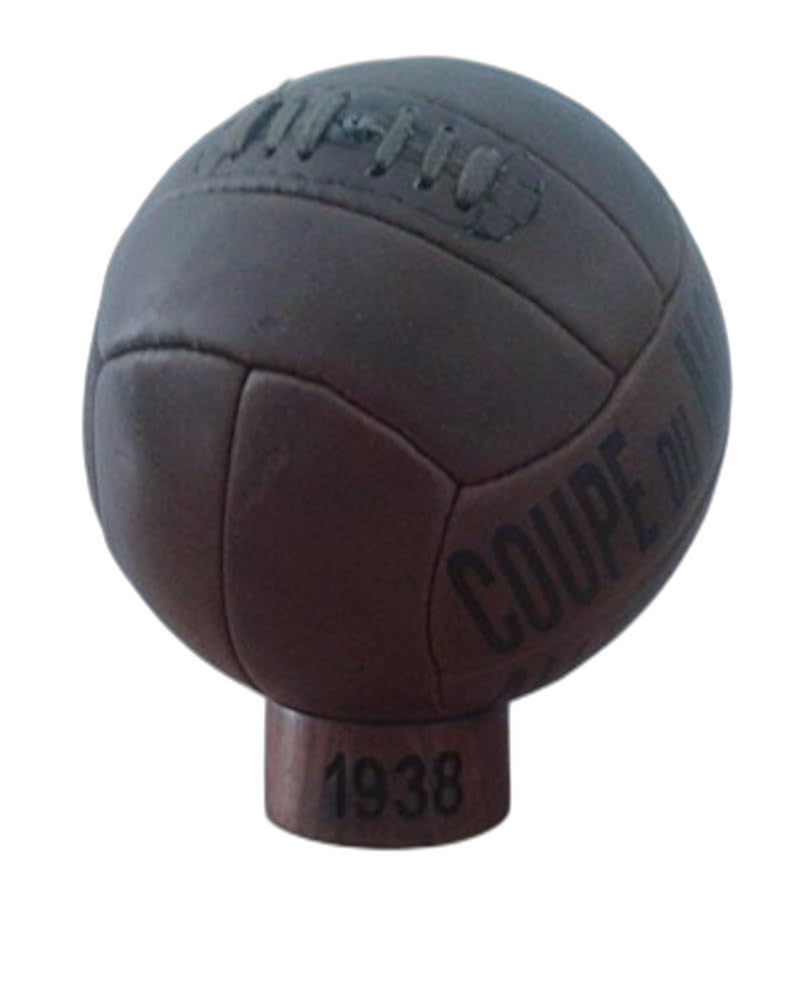
The Allen was France's contribution a hand-stitched leather ball similar in construction to the Federale 102 but slightly lighter. Its panels were more uniformly cut, producing a marginally more predictable flight. Still, heading the ball in wet conditions was an act of courage.

Goals by minute
10 1-15 13 16-30 17 31-45 7 46-60 12 61-75 25 76+
Goals by stage
R1644
QF19
SF9
3rd6
Final6
The Squads

Shadows falling over the squads

The Contenders

Italy returned as defending champions, their squad refreshed but still formidable. Brazil arrived with Leônidas, the Black Diamond, whose acrobatic goals captivated crowds. Hungary were quietly strong. The forced merger of Austria into Germany created an uneasy combined squad that never gelled.

Style & Identity

Brazilian football announced itself as something entirely new joyful, inventive, physical. Italy's disciplined metodo still won the day. The Dutch East Indies became the first Asian team to play in a World Cup, losing heavily but opening a door for future generations.

Leônidas debutsAustria-Germany mergerFirst Asian team
Golden Ball
Leônidas
Brazil

The Black Diamond's acrobatic goals and infectious joy made him the tournament's outstanding individual. His seven goals and inventive play announced Brazilian football as something entirely new. Controversially rested for the semifinal, which Brazil lost.

Golden Glove
Frantisek Plánička
Czechoslovakia

One of the era's finest goalkeepers, Plánička played the semifinal against Brazil with a broken arm and still performed heroically. His shot-stopping and courage made Czechoslovakia's run possible.

Golden Ball
Leônidas
Brazil

The Black Diamond's acrobatic goals and infectious joy made him the tournament's outstanding individual. His seven goals and inventive play announced Brazilian football as something entirely new. Controversially rested for the semifinal, which Brazil lost.

Golden Glove
Frantisek Plánička
Czechoslovakia

One of the era's finest goalkeepers, Plánička played the semifinal against Brazil with a broken arm and still performed heroically. His shot-stopping and courage made Czechoslovakia's run possible.

The Legends

Leônidas, the Black Diamond

Stars

Leônidas da Silva was the tournament's sensation seven goals, acrobatic bicycle kicks, and a showmanship that predicted Brazilian football's future. Silvio Piola powered Italy's attack with physicality and precision. György Sárosi led Hungary with intelligence from deep positions.

Moments

Leônidas was rested for the semifinal against Italy a decision Brazil's coach Adhemar Pimenta would regret for the rest of his life. Italy won 2-1. The quarter-final between Brazil and Czechoslovakia was so violent it required a replay. Ernest Wilimowski of Poland scored four goals in a match his team still lost 6-5 to Brazil.

7 goals from LeônidasPiola's powerWilimowski's 4 in a loss
15 Participating Nations
This site uses cookies and localStorage for authentication, preferences, and gameplay. No third-party tracking. Privacy Policy