
1930
Uruguay '30
1934
Italy '34
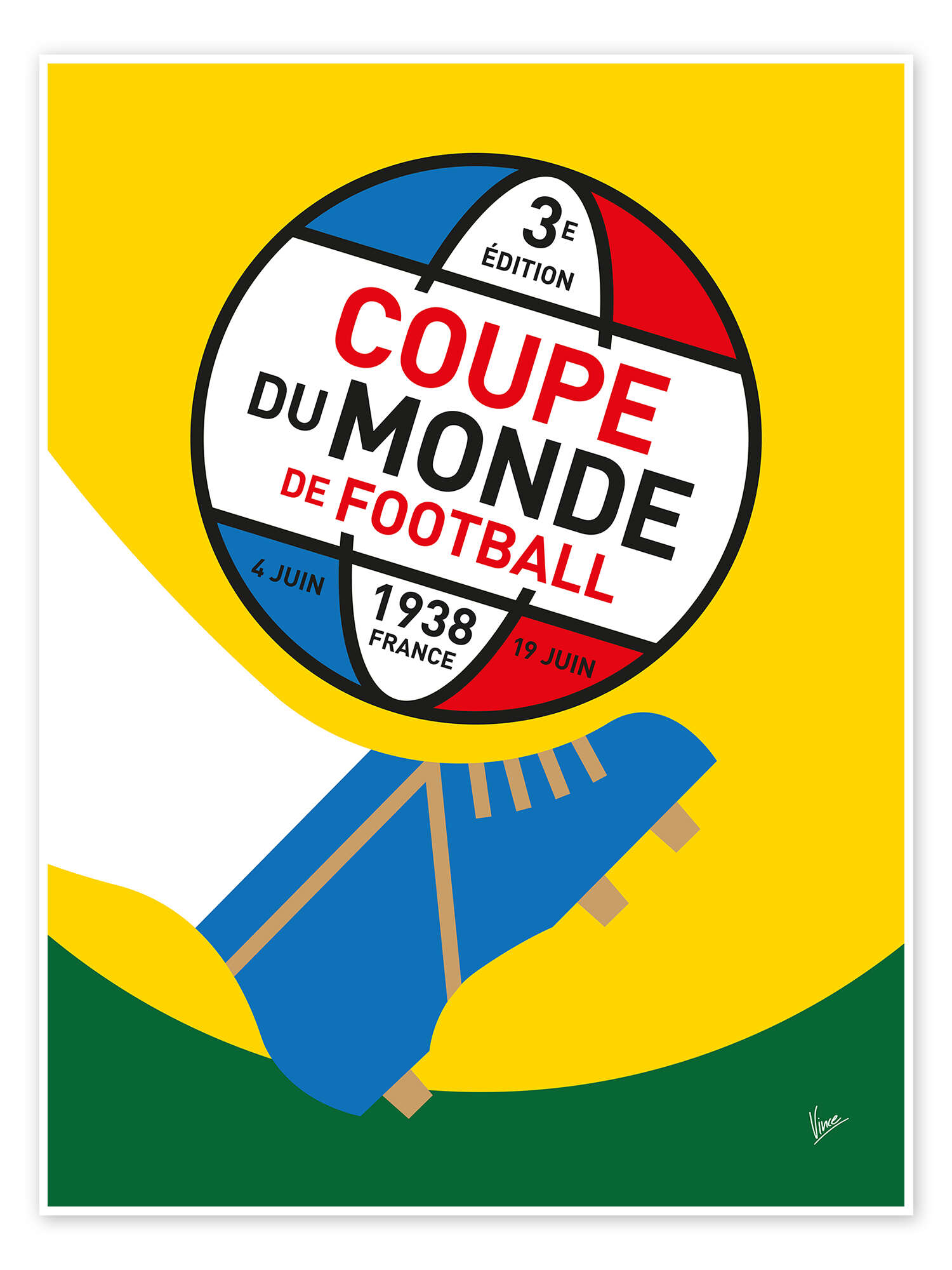
1938
France '38
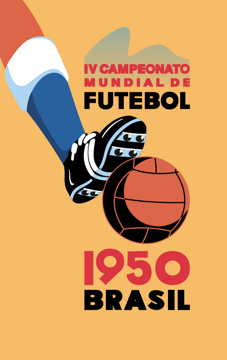
1950
Brazil '50
1954
Switzerland '54
1958
Sweden '58
1962
Chile '62
1966
England '66
1970
Mexico '70
1974
West Germany '74
1978
Argentina '78
1982
Spain '82
1986
Mexico '86
1990
Italy '90
1994
United States '94
1998
France '98
2002
Korea Japan '02
2006
Germany '06
2010
South Africa '10
2014
Brazil '14
2018
Russia '18
2022
Qatar '22
2026
USA Canada Mexico '26
1934
Italia · 1934
FIFA World Cup
27 May – 10 Jun 1934 17 matches Italy '34
👟︎ Golden Boot
Oldřich Nejedlý
CSK Czechoslovakia
⚽︎ Golden Ball
Giuseppe Meazza
ITA Italy
🧤︎ Golden Glove
Ricardo Zamora
ESP Spain
ITA Champion

Italy win at any cost

The Campaign

Italy's route to the final was relentless every match a knockout, every match won. They beat the USA 7-1, Spain in a bruising replay, and Austria 1-0 in the semifinal in a downpour that neutralised the Wunderteam's passing game. Vittorio Pozzo's squad blended home-grown talent with South American oriundi, and the pressure from Mussolini's regime was immense.

The Final

Czechoslovakia took the lead in the 76th minute through Antonín Puč. With the title slipping away, Orsi equalised with a curling shot eight minutes later. In extra time, Schiavio scored the winner. Italy's celebrations were immediate and politicised the regime claimed the victory as proof of fascist superiority. The players themselves had simply survived an exhausting tournament.

2-1 final (aet)All knockout roundsRegime pressure
CSK Runner-up

Czechoslovakia's brave resistance

The Journey

Czechoslovakia were a strong, technically gifted side built around Antonín Puč and František Plánička, one of the era's finest goalkeepers. They beat Romania, Switzerland, and Germany on their way to the final, playing an intelligent passing game that was ahead of its time.

The Heartbreak

Puč gave Czechoslovakia the lead with 14 minutes remaining. The title was within reach. But Italy's Orsi equalised with a spectacular curling shot, and Schiavio scored in extra time. So close to lifting the trophy, Czechoslovakia became the first team to experience the unique cruelty of losing a World Cup final after taking the lead.

Led in the 76th minLost in extra timePlánička's heroics
Top Scorers
1 CSK Oldřich Nejedlý 5
2 ITA Angelo Schiavio 4
2 DEU Edmund Conen 4
4 ITA Raimundo Orsi 3
4 CHE Leopold Kielholz 3
6 CSK Antonín Puč 2
Golden Boot
Oldřich Nejedlý

Nejedlý of Czechoslovakia is credited as top scorer, though FIFA has revised the tallies multiple times. Goals came from set pieces and physical duels on heavy, muddy pitches. Italy's Schiavio and Orsi scored the decisive final goals. The single-elimination format meant every goal carried elimination weight there were no dead rubbers.

The World in 1934

Mussolini's stage, Europe's game

Football

Uruguay, the defending champions, refused to travel in protest at Europe's boycott of 1930. Austria's Wunderteam under Hugo Meisl had redefined how football could be played. Italy, the host, was under enormous pressure from the regime to win at any cost.

The World

Fascist Italy saw the World Cup as a propaganda instrument. Mussolini invested heavily in stadiums and infrastructure. Spain was sliding toward the turmoil that would erupt into civil war two years later. Authoritarianism was spreading across the continent.

Fascist ItalyAustria WunderteamUruguay boycott
The Venues

Mussolini's showcase

Preparation

The Italian regime invested heavily in stadium construction as part of a broader propaganda effort. Eight cities were selected to host matches. Several stadiums were renovated or expanded, including new concrete structures designed to project Fascist modernity. The tournament was organised with military efficiency.

The Venues

The Stadio Nazionale del PNF in Rome hosted the final. Bologna's Stadio Littoriale, Milan's San Siro, and the stadiums of Turin, Florence, Naples, Genoa, and Trieste completed the roster. The venues were architecturally imposing, built to impress visiting delegations as much as spectators.

8 citiesRegime-built venuesSan Siro
Italy 1934
Italy 1934
0 matches

Played across 8 teams

8R165QF2SF13rd1Final

The Host Cities

Eight cities across the peninsula

The Cities

Rome, Milan, Turin, Naples, Florence, Bologna, Genoa, and Trieste hosted matches. The geographic spread showcased Italy's regional diversity, from the industrial north to the southern port of Naples. Teams were based in grand hotels chosen by the regime, and training facilities were provided at Italy's established club grounds. The Fascist government used the tournament to project an image of Italian modernity and unity.

Impact

The regime invested in roads, railways, and urban infrastructure connecting the eight host cities. Tourism, though modest by modern standards, brought foreign visitors and press attention. The stadiums built or renovated for the tournament became anchors for Italian club football for decades. The economic benefit was secondary to the political propaganda value, but the infrastructure legacy was real.

8 host citiesInfrastructure investmentRegime showcase
Federale 102
On the pitch
0 goals

4.12per match

Match Ball
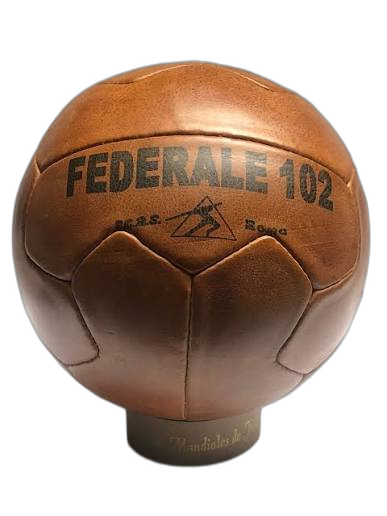
Federale 102

Italy's Federale 102 featured a cotton-laced interior and hand-stitched panels, an improvement in shape consistency over 1930. Still a heavy leather ball prone to absorbing water, it favoured powerful strikers over finesse players. Its rounder profile helped the hosts' short-passing game.

Goals by minute
8 1-15 16 16-30 9 31-45 9 46-60 16 61-75 12 76+
Goals by stage
R1643
QF14
SF5
3rd5
Final3
The Squads

Sixteen teams, one obsession

The Contenders

Italy assembled a squad mixing Italian-born players with South American oriundi players of Italian descent recruited from Argentina. Austria's Wunderteam, led by Matthias Sindelar, played the most sophisticated football on the planet. Czechoslovakia and Hungary were also genuine threats.

Style & Identity

The Italian system under Vittorio Pozzo blended tactical discipline with the technical gifts of the oriundi. Hugo Meisl's Austrian passing game was a revelation. Central European football was at its zenith, and every match felt loaded with political significance.

Italian oriundiCentral European zenithKnockout only
Golden Ball
Giuseppe Meazza
Italy

Italy's golden boy graceful, lethal, and adored. His influence on the tournament was total, combining goals with link-up play that made Italy's attack function. He was the complete forward of his era.

Golden Glove
Ricardo Zamora
Spain

The great Zamora already a legend was Spain's best player before their elimination. His agility and command of the area set the standard for goalkeeping in the era. Combi of Italy won the tournament but Zamora was the better keeper.

Golden Ball
Giuseppe Meazza
Italy

Italy's golden boy graceful, lethal, and adored. His influence on the tournament was total, combining goals with link-up play that made Italy's attack function. He was the complete forward of his era.

Golden Glove
Ricardo Zamora
Spain

The great Zamora already a legend was Spain's best player before their elimination. His agility and command of the area set the standard for goalkeeping in the era. Combi of Italy won the tournament but Zamora was the better keeper.

The Legends

Meazza, Sindelar, and the age of elegance

Stars

Giuseppe Meazza was Italy's golden boy graceful, lethal, and adored. His influence on the tournament was total. Matthias Sindelar, Austria's paper man, played football as if composing music, his slight frame ghosting past defenders. Oldřich Nejedlý of Czechoslovakia top-scored, though the records are disputed.

Moments

Sindelar's refusal to give the Nazi salute during the Anschluss exhibition match two years later would cement his legend, but in 1934 his artistry on the pitch was already unforgettable. The semifinal between Italy and Austria was the match of the tournament played in a downpour that neutralised Austria's passing game.

Meazza's ItalySindelar's artistryNejedlý's goals
16 Participating Nations
This site uses cookies and localStorage for authentication, preferences, and gameplay. No third-party tracking. Privacy Policy