






1930
Uruguay '30
1934
Italy '34
1938
France '38
1950
Brazil '50
1954
Switzerland '54
1958
Sweden '58
1962
Chile '62
1966
England '66
1970
Mexico '70
1974
West Germany '74
1978
Argentina '78
1982
Spain '82
1986
Mexico '86
1990
Italy '90
1994
United States '94
1998
France '98
2002
Korea Japan '02
2006
Germany '06
2010
South Africa '10
2014
Brazil '14
2018
Russia '18
2022
Qatar '22
2026
USA Canada Mexico '26
1970
México · 1970
FIFA World Cup
31 May – 21 Jun 1970 32 matches Mexico '70
👟︎ Golden Boot
Gerd Müller
FRG West Germany
⚽︎ Golden Ball
Pelé
BRA Brazil
🧤︎ Golden Glove
Gordon Banks
ENG England
BRA Champion

Brazil claim football's throne forever

The Campaign

Brazil won every match they played six victories, no draws, no defeats. They scored 19 goals. Every game was an exhibition. Pelé, Jairzinho, Tostão, Gérson, Rivelino, and Carlos Alberto played as if choreographed. In colour television's first World Cup, Brazil's yellow shirts became the image of football itself.

The Final

Italy tried to contain them. It lasted 18 minutes. Pelé headed the opener. Gérson's left-foot drive made it 2-0. Jairzinho scored in every match of the tournament. Then came Carlos Alberto's goal a nine-pass team move from left to right, finished with a thundering drive the greatest World Cup goal ever scored. Brazil 4, Italy 1. They kept the Jules Rimet trophy permanently. The greatest team in history.

4-1 final6 wins from 6Jules Rimet kept forever
ITA Runner-up

Italy's catenaccio meets its match

The Journey

Italy reached the final through their trademark catenaccio conceding just one goal in four matches before the semifinal. Then came the Game of the Century against West Germany: a 4-3 extra-time thriller that drained everything. Rivera and Boninsegna led an attack that was more potent than Italy's defensive reputation suggested.

The Heartbreak

Boninsegna equalised after Pelé's header to make it 1-1. But Brazil's second-half was relentless Gérson, Jairzinho, and Carlos Alberto's majestic final goal made it 4-1. Italy were outclassed by the greatest team ever assembled. There was no shame in losing to this Brazil but the margin was stark. Italy's defensive philosophy had met its ultimate counterargument.

4-1 defeatGame of the Century SFBoninsegna's equaliser
Top Scorers
1 FRG Gerd Müller 10
2 BRA Jairzinho 7
3 PER Teófilo Cubillas 5
4 BRA Pelé 4
4 SUN Anatoliy Byshovets 4
6 ITA Gigi Riva 3
Golden Boot
Gerd Müller

Müller's ten goals were scored with ruthless economy almost all from inside the six-yard box, a predator who needed one chance. Jairzinho scored in every match Brazil played, a feat never repeated. Pelé contributed four goals and assists that don't appear in the statistics. The tournament produced 95 goals in 32 matches.

The World in 1970

Television was about to change everything

Football

This would be the first World Cup broadcast in colour. FIFA had sold television rights and European broadcasters demanded midday kick-off times, despite Mexico's extreme altitude and heat. Brazil, with Pelé playing his last World Cup, were expected to dazzle. Italy and West Germany were the European heavyweights.

The World

Student massacres in Mexico City in 1968 were still fresh. The Vietnam War was at its height. The Apollo programme was redefining human ambition. The world was watching through screens more than ever before.

First colour TVMexico altitudeVietnam War era
The Venues

Altitude and the Azteca

Preparation

Mexico's hosting required teams to adapt to extreme altitude, with several venues above 1,500 metres. The Estadio Azteca in Mexico City, inaugurated in 1966, was already one of the world's great stadiums. Five cities were selected, each with existing infrastructure. Midday kickoffs, demanded by European television, created punishing conditions.

The Venues

The Azteca, holding 107,000, hosted the opening match and the final. Its volcanic stone construction and towering stands made it one of the most imposing grounds in football. Estadio Jalisco in Guadalajara, the Estadio Nou Camp in León, and venues in Puebla and Toluca completed the roster.

5 citiesAzteca 107,000High altitude
Mexico 1970
Mexico 1970
0 matches

Played across 12 teams

24Group4QF2SF13rd1Final

The Host Cities

Five Mexican cities under the sun

The Cities

Mexico City, Guadalajara, Puebla, León, and Toluca hosted matches. Mexico City, at 2,240 metres above sea level, posed the greatest altitude challenge. Guadalajara became the tournament's second city, hosting Brazil's group matches. Teams acclimatised at altitude training camps weeks before the tournament. Training grounds were often basic by European standards, but the hospitality was warm.

Impact

The tournament brought unprecedented international attention to Mexico, still recovering from the political fallout of the 1968 student massacres. Tourism revenues were substantial. The colour television broadcasts beamed images of Mexican culture, architecture, and landscapes to a global audience for the first time. Mexico City's infrastructure improvements for the 1968 Olympics laid the groundwork for the capital's modernisation.

5 host cities2,240m altitudeFirst colour broadcasts
Adidas Telstar
On the pitch
0 goals

2.97per match

Match Ball
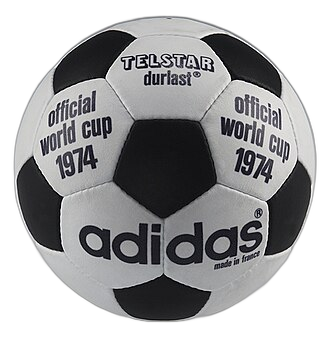
Adidas Telstar

The Telstar changed everything. Its 32-panel design with black pentagons on a white background was created specifically for television visibility 'Television Star' shortened to Telstar. Adidas's first World Cup ball was rounder, more consistent, and more visible than anything before. It became the template for every football that followed and is still the default image when people picture a football.

Goals by minute
11 1-15 15 16-30 7 31-45 20 46-60 16 61-75 26 76+
Goals by stage
Group61
QF17
SF11
3rd1
Final5
The Squads

The greatest team ever assembled

The Contenders

Brazil arrived with a squad that many still consider the finest in football history: Pelé, Jairzinho, Tostão, Gérson, Rivelino, Carlos Alberto. Italy had rebuilt around catenaccio. West Germany, with Beckenbauer and Müller, were stronger than ever. England arrived as holders.

Style & Identity

Brazil played with a freedom and creativity that television now broadcasting in colour for the first time brought to a global audience of hundreds of millions. Every game was an exhibition. Italy's defensive rigidity was the antithesis. The semifinal between Italy and West Germany, the Game of the Century, was end-to-end chaos. The final was a coronation.

Brazil's dream teamFirst colour TVGame of the Century
Golden Ball
Pelé
Brazil

His final World Cup at 29 was magnificent scoring, assisting, and dominating. The dummy against Uruguay, the header saved by Banks, the pass to Carlos Alberto's goal. He left the World Cup stage as the greatest player who ever lived.

Golden Glove
Gordon Banks
England

His save from Pelé's header diving right, reaching back, scooping the ball over the bar is the most famous save in football history. England were eliminated after Banks fell ill for the quarter-final against West Germany.

Golden Ball
Pelé
Brazil

His final World Cup at 29 was magnificent scoring, assisting, and dominating. The dummy against Uruguay, the header saved by Banks, the pass to Carlos Alberto's goal. He left the World Cup stage as the greatest player who ever lived.

Golden Glove
Gordon Banks
England

His save from Pelé's header diving right, reaching back, scooping the ball over the bar is the most famous save in football history. England were eliminated after Banks fell ill for the quarter-final against West Germany.

The Legends

Pelé's farewell, Müller's arrival

Stars

Pelé played his final World Cup at 29 and was magnificent scoring, assisting, and dominating. Gerd Müller scored 10 goals with ruthless efficiency, every strike from close range. Jairzinho scored in every match Brazil played, the only player to achieve this in a World Cup. Rivelino's left foot was a weapon of surgical precision.

Moments

Carlos Alberto's goal in the final a nine-pass team move finished with a thundering right-foot drive is considered the greatest World Cup goal ever scored. Pelé's dummy against Uruguay, running one side of the goalkeeper while the ball went the other, is remembered even though he missed the shot. Gordon Banks's save from Pelé's header is the most famous save in history. This was football's golden hour.

Carlos Alberto's goalBanks's saveJairzinho — every match
16 Participating Nations
This site uses cookies and localStorage for authentication, preferences, and gameplay. No third-party tracking. Privacy Policy