1930
Uruguay '30
1934
Italy '34
1938
France '38
1950
Brazil '50
1954
Switzerland '54
1958
Sweden '58
1962
Chile '62
1966
England '66
1970
Mexico '70
1974
West Germany '74
1978
Argentina '78
1982
Spain '82
1986
Mexico '86
1990
Italy '90
1994
United States '94
1998
France '98
2002
Korea Japan '02
2006
Germany '06
2010
South Africa '10
2014
Brazil '14
2018
Russia '18
2022
Qatar '22
2026
USA Canada Mexico '26
1982
España · 1982
FIFA World Cup
13 Jun – 11 Jul 1982 52 matches Spain '82
👟︎ Golden Boot
Paolo Rossi
ITA Italy
⚽︎ Golden Ball
Paolo Rossi
ITA Italy
🧤︎ Golden Glove
Dino Zoff
ITA Italy
ITA Champion

Italy rise from the ashes

The Campaign

Italy drew all three group matches and scraped through. Nobody gave them a chance. Then Paolo Rossi, just back from a match-fixing ban, scored a hat-trick against Brazil in the second group stage three goals that eliminated the most talented team in the tournament. Poland fell in the semifinal. Italy had transformed from passengers to predators.

The Final

West Germany were exhausted from their semifinal against France. Italy controlled the match from the start. Rossi opened the scoring, Tardelli's screaming celebration after the second goal became an iconic image, and Altobelli sealed a 3-1 victory. President Pertini celebrated wildly in the stands. Italy's third World Cup title was the most improbable nobody had seen it coming, least of all the Italians themselves.

3-1 finalRossi's resurrectionTardelli's scream
FRG Runner-up

West Germany's exhaustion catches up

The Journey

West Germany's route to the final was marred by the Disgrace of Gijón a passive 1-0 win over Austria that eliminated Algeria and shamed both nations. Their semifinal against France in Seville was the greatest World Cup match ever played Schumacher's unpunished assault on Battiston, the first penalty shootout, and a comeback from 3-1 down in extra time.

The Heartbreak

The semifinal had drained them physically and emotionally. Against Italy in the final, they were a shadow. Rossi, Tardelli, and Altobelli scored in a 3-1 defeat that was never truly competitive. Rummenigge played through injury but could not influence the match. West Germany's tournament ended in anticlimax the brilliance of Seville forgotten in the exhaustion of Madrid.

3-1 defeatDisgrace of GijónSeville semifinal drained
Top Scorers
1 ITA Paolo Rossi 6
2 FRG Karl-Heinz Rummenigge 5
3 POL Zbigniew Boniek 4
3 BRA Zico 4
5 FRA Alain Giresse 3
5 BRA Falcão 3
Golden Boot
Paolo Rossi

Rossi's six goals came in a concentrated burst a hat-trick against Brazil in the second group stage, then goals against Poland and West Germany. His return from a two-year match-fixing ban to win the Golden Boot was the tournament's defining redemption arc. Rummenigge scored five despite playing through injury.

The World in 1982

An expanded stage for a tense world

Football

The format expanded to 24 teams for the first time. Brazil's midfield of Zico, Sócrates, Falcão, and Junior was already being called the most talented ever assembled. Italy's Paolo Rossi had just returned from a two-year match-fixing ban and was considered a gamble by his own federation.

The World

The Falklands War between Argentina and Britain had ended just weeks before kickoff, adding geopolitical tension to every encounter. Spain, the host, was navigating its young democracy after decades of Franco's dictatorship. Cold War anxieties persisted across Europe.

24-team formatFalklands WarBrazil's golden midfield
The Venues

Spain opens seventeen doors

Preparation

The expansion to 24 teams required an unprecedented number of venues. Spain selected 17 stadiums across 14 cities, the most ever used at a World Cup. Several grounds were renovated, and a handful of new stadiums were built, including the Estadio de Balaídos in Vigo. The Santiago Bernabéu in Madrid was chosen for the final.

The Venues

The Bernabéu, with 90,000 seats, hosted the final. Camp Nou in Barcelona, already Europe's largest stadium, held semi-finals. The Sánchez-Pizjuán in Seville hosted the legendary semi-final between West Germany and France. Venues ranged from the Basque Country to Andalusia, reflecting Spain's regional diversity.

17 stadiumsBernabéu finalCamp Nou
Spain 1982
Spain 1982
0 matches

Played across 19 teams

36Group2SF13rd1Final

The Host Cities

Spain from coast to coast

The Cities

Madrid, Barcelona, Seville, Valencia, Bilbao, Málaga, Zaragoza, Valladolid, Vigo, Oviedo, Alicante, Gijón, La Coruña, and Elche hosted matches across fourteen cities. Spain's regional diversity was on full display, from Basque Country to Andalusia. Teams were based in resort hotels along the Mediterranean and Atlantic coasts. Training facilities ranged from top-tier club grounds to modest municipal pitches.

Impact

Spain's young democracy used the World Cup to announce itself to the world. The tourism industry, already the country's economic engine, received a massive boost. Transport infrastructure connecting the regions was upgraded. International visitors experienced Spain's cultural richness firsthand. The tournament helped accelerate Spain's integration into European economic and political structures, contributing to the country's remarkable transformation in the post-Franco era.

14 host citiesYoung democracyTourism engine
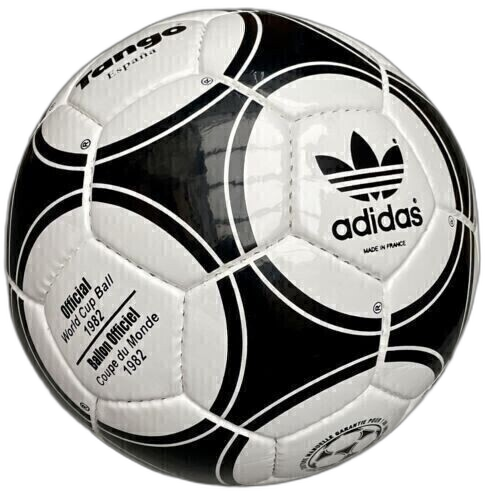
Adidas Tango España
On the pitch
0 goals

2.81per match

Match Ball
Adidas Tango España

The Tango España was the last genuine leather World Cup ball. It featured rubber inlaid seams to improve water resistance, but the leather panels still absorbed moisture as the tournament wore on. Beautiful to look at and satisfying to strike, it was a bridge between the craft era and the synthetic future.

Goals by minute
15 1-15 23 16-30 12 31-45 25 46-60 37 61-75 34 76+
Goals by stage
Group100
2nd Group29
SF8
3rd5
Final4
The Squads

The most romantic World Cup ever played

The Contenders

Brazil's 1982 squad Zico, Sócrates, Falcão, Éder, Cerezo played the most beautiful football since 1970. Italy lurked quietly, Paolo Rossi struggling for form until the moment it mattered most. France, with Platini, Giresse, and Tigana, had a midfield carré magique. West Germany were clinical as always.

Style & Identity

The expanded 24-team format produced more matches but also more upsets. Algeria beat West Germany. Cameroon went unbeaten. Northern Ireland topped their group. The semifinal between France and West Germany in Seville Schumacher's foul on Battiston, the first penalty shootout is considered the greatest World Cup match ever played.

Brazil's artistryCarré MagiqueSchumacher's foul
Golden Ball
Paolo Rossi
Italy

From match-fixing ban to Golden Boot in the span of three weeks. His hat-trick against Brazil was the tournament's decisive intervention. Six goals in total, each one at the exact moment Italy needed it most.

Golden Glove
Dino Zoff
Italy

At 40, Zoff became the oldest player to win a World Cup. His experience, positioning, and authority were the foundation of Italy's resurgence. He lifted the trophy with the calm of a man who had waited a lifetime for the moment.

Golden Ball
Paolo Rossi
Italy

From match-fixing ban to Golden Boot in the span of three weeks. His hat-trick against Brazil was the tournament's decisive intervention. Six goals in total, each one at the exact moment Italy needed it most.

Golden Glove
Dino Zoff
Italy

At 40, Zoff became the oldest player to win a World Cup. His experience, positioning, and authority were the foundation of Italy's resurgence. He lifted the trophy with the calm of a man who had waited a lifetime for the moment.

The Legends

Rossi, Zico, and the agony of beauty

Stars

Paolo Rossi returned from a two-year match-fixing ban to score six goals and win the Golden Boot his hat-trick against Brazil was the tournament's decisive intervention. Zico was the most gifted player in the competition but could not save Brazil from Rossi's predatory instincts. Michel Platini announced France's golden generation. Karl-Heinz Rummenigge played through injury for West Germany.

Moments

Rossi's hat-trick against Brazil in the second group stage three goals against the best team in the world remains the most important individual performance in World Cup history. Schumacher's unpunished assault on Battiston in the semifinal was a crime without consequence. Tardelli's primal scream after scoring in the final is an indelible image. Algeria's victory over West Germany in the opener made the Disgrace of Gijón possible.

Rossi — 6 goalsTardelli's screamDisgrace of Gijón
24 Participating Nations
This site uses cookies and localStorage for authentication, preferences, and gameplay. No third-party tracking. Privacy Policy